
Chicken Road Game Reality Check: Payout Scheme, Odds, and What to Expect from Chicken Road Payouts
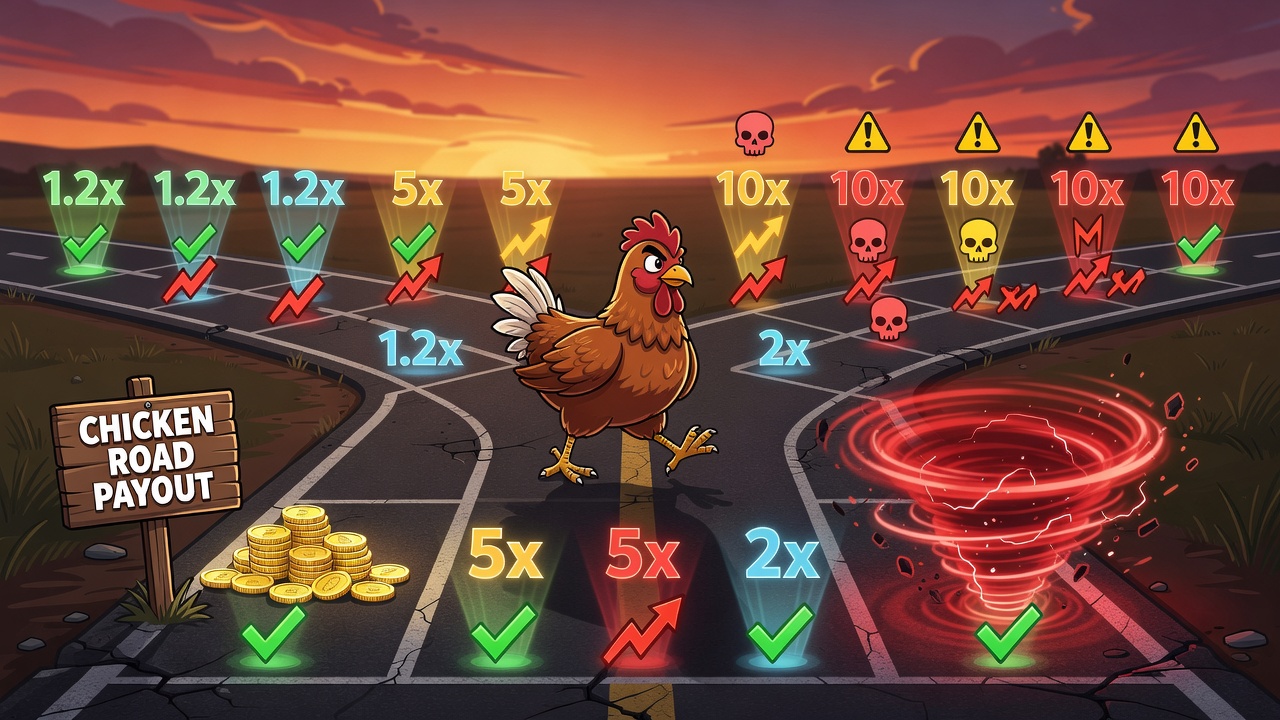
A chicken that stops moving forward keeps every coin it has earned. A chicken that takes one more step risks losing everything instantly. That single mechanic, repeated dozens of times per session, defines the entire appeal of the chicken road game and explains why so many players misjudge how the payout curve actually behaves.
The premise looks simple on the surface: a virtual chicken advances across a road divided into segments, and each segment cleared multiplies the current stake. Stop early and collect a modest chicken road payout. Push further and the multiplier climbs, but so does the probability of a fatal misstep that wipes the round clean. Before committing real money, many players search for an honest breakdown of chicken road game payout reality, and understanding that dynamic changes how the game should actually be played rather than how it appears at first glance.
What follows is a grounded look at the mechanics behind the curtain - the mathematics, the odds structure, and the behavioral traps that catch inexperienced players. This is not a promise of guaranteed wins. It is a chicken road game reality check built on how these systems are typically engineered, so you can approach the game with realistic expectations instead of wishful thinking.
How the Chicken Road Game Actually Works
Core Mechanics and Rules
The chicken road game follows a provably fair, round-based structure. A player sets a stake, then decides how many segments the chicken should attempt to cross. Each successful segment increases a multiplier applied to the original stake. The player can cash out after any successful step, locking in the current multiplier as a payout. Failing to cash out before a bad step means losing the entire wagered amount for that round, not just the profit accumulated.
The Role of Randomness
Every step's outcome is determined by a random number generator calibrated to a specific failure probability. That probability is not fixed across the whole board - it typically rises as the multiplier grows, which is the core reason later segments feel riskier despite offering bigger rewards. This escalating risk is what makes the game function more like a controlled gamble than a skill-based challenge.
Why It Feels Different from Traditional Slot Games
Unlike a slot machine spin, which resolves in a single instant, the chicken road game stretches decision-making across multiple discrete moments. Each step forces an active choice: continue or cash out. That interactivity creates an illusion of control that traditional games lack, even though the underlying probability engine operates on the same principles as any other randomized casino product.
Chicken Road Payout Scheme Explained
How Multipliers Scale Across Steps
The chicken road game payout scheme is built around a progressive multiplier table. Early steps carry small multiplier increases and low failure risk. As the chicken advances, each subsequent step offers a disproportionately larger multiplier jump, paired with a steeper chance of failure. This creates a curve where the middle and late stages of a run offer the most dramatic swings in potential outcome.
Stake Size and Payout Correlation
The multiplier applies directly to the stake, so a $10 bet and a $100 bet follow identical multiplier logic, just with different absolute payout figures. The scheme itself does not favor larger or smaller stakes - the ratio of risk to reward stays constant regardless of wager size.
House Edge Built into the Curve
Like any regulated casino product, the chicken road payout structure incorporates a built-in house edge. This is typically achieved by setting the true failure probability at each step slightly higher than what a mathematically "fair" payout would require. The gap between fair odds and actual odds is where the operator's margin lives, and it compounds the longer a player pushes forward.
- Early steps: low multiplier growth, low failure probability
- Mid-game steps: moderate multiplier growth, rising failure probability
- Late steps: steep multiplier growth, high failure probability and elevated house edge exposure
Road Game Chicken Payout Odds: What the Numbers Really Mean
Calculating Implied Probability
Every multiplier offered in the game implies a corresponding probability of success. A multiplier of 2x roughly implies a near 50% chance of clearing that step under fair conditions, before the house edge adjustment is applied. Once the edge is factored in, actual survival odds sit lower than the multiplier alone would suggest.
Why Odds Worsen the Further You Go
Road game chicken payout odds are not linear. Cumulative probability of surviving ten consecutive steps is dramatically lower than surviving one step ten separate times, because each success must occur in sequence without a single failure. This compounding effect is often underestimated by players chasing large multipliers.
Comparing Odds Across Risk Settings
Many versions of the game allow players to select a difficulty or volatility setting before starting a round. Higher volatility settings increase the failure probability per step in exchange for steeper multiplier growth, while lower volatility settings spread smaller rewards across a gentler risk curve. Choosing a setting is really choosing which odds structure suits your risk tolerance, not a way to beat the underlying math.
Chicken Road Game Reality Check: Myths vs Facts
Myth: Skill Can Improve Your Odds
No amount of timing, pattern-reading, or step-counting changes the underlying random number generation. The game rewards discipline in deciding when to cash out, but it does not reward skill in predicting outcomes, because each step's result is independent and unpredictable by design.
Myth: Losing Streaks Predict Upcoming Wins
A string of early failures has no bearing on future rounds. Each new round starts with the same baseline probability distribution. Believing otherwise is a classic gambler's fallacy that leads players to increase stakes irrationally after losses.
Fact: The House Edge Is Constant, Not Occasional
The edge built into the chicken road payout scheme applies to every single round, not just a subset of unlucky sessions. Over a large enough sample of rounds, the mathematical edge asserts itself regardless of short-term winning streaks.
What to Expect from Chicken Road Payouts in Practice
Typical Payout Ranges for Cautious Play
Players who cash out early and consistently tend to see modest, steady multipliers, generally in the 1.2x to 2x range per successful round. This approach reduces variance but also caps upside potential significantly.
Typical Payout Ranges for Aggressive Play
Players chasing higher multipliers by pushing further into the road occasionally land large payouts, sometimes reaching double-digit multipliers, but these outcomes are rare relative to the frequency of total losses experienced along the way.
Long-Term Session Expectations
Across extended play, the built-in house edge means that average returns trend below the total amount wagered. Short-term results can vary widely, but the long-run trajectory follows standard probability-based casino economics rather than any exploitable pattern.
Responsible Play: Managing Risk in the Chicken Road Game
Setting a Cash-Out Rule Before You Start
Deciding on a target multiplier before the round begins removes emotional decision-making from the equation. Committing to a fixed cash-out point, regardless of how tempting further steps look, is the single most effective discipline tool available to players.
Bankroll Allocation Strategies
Treating each round as an isolated, disposable bet rather than part of a recovery strategy prevents the common trap of chasing losses with larger stakes. Allocating a strict session budget and stopping once it's exhausted keeps the experience recreational rather than financially damaging.
Recognizing When to Walk Away
Extended losing sessions, rising frustration, or the urge to "make up" losses through bigger bets are all signals that it's time to stop. No payout scheme rewards emotional persistence, and the odds don't shift in your favor because you feel due for a win.
Frequently Asked Questions
Is the chicken road game rigged against players?
The game is typically built on a provably fair random number generator with a built-in house edge, which is standard across regulated casino products. It isn't "rigged" in the sense of manipulated outcomes, but the odds are structurally designed to favor the operator over time.
What's the best step count to cash out at?
There is no universally best step count, since it depends entirely on your personal risk tolerance and bankroll size. Cashing out early reduces variance and secures smaller, more frequent wins, while pushing further increases both potential reward and the statistical likelihood of losing everything staked.
Do higher stakes change the odds of success?
No. Stake size only affects the absolute dollar value of the payout, not the underlying probability of surviving each step. A $5 bet and a $500 bet face identical failure odds at every point on the road.
Can betting patterns or strategies beat the house edge?
No betting pattern, staking system, or step-counting strategy can overcome a fixed mathematical house edge over the long run. These systems may change short-term variance and the shape of individual sessions, but they cannot alter the fundamental probability structure built into the game.
Why do multipliers grow faster in later steps?
Multipliers accelerate later in the round specifically because failure probability also rises sharply at those stages. The larger reward exists to compensate for the significantly higher chance of losing everything on that particular step.
Is it possible to verify that a round was fair after it's over?
Many platforms offering this game use provably fair cryptographic methods that allow players to verify the random seed and outcome calculation after a round concludes. Checking this verification data is a practical way to confirm that a specific result wasn't altered after the fact.